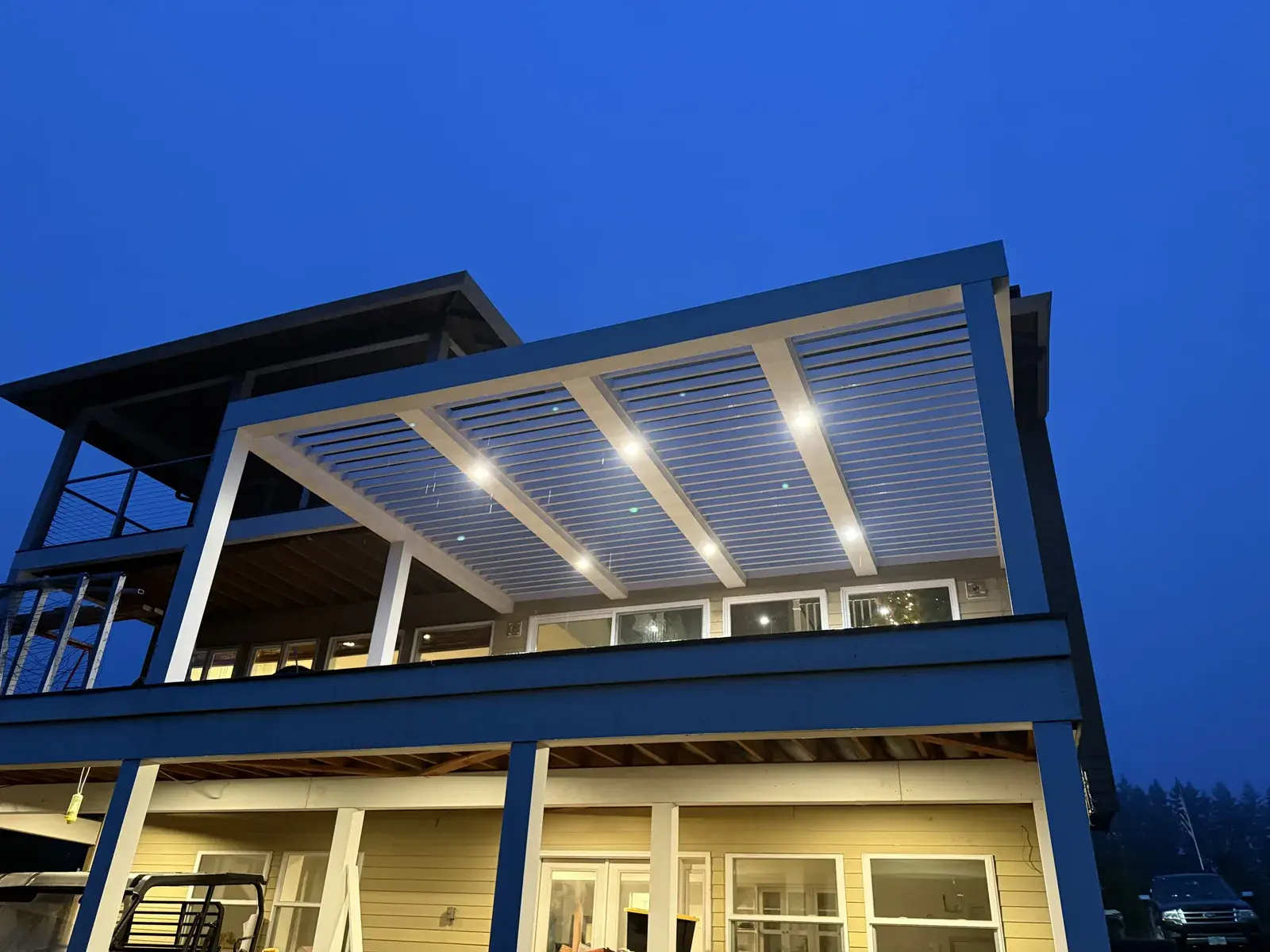
It gets dark here by the middle of the afternoon for a good part of the year. Lights in the steps and railings let you keep using the deck through those months, and they make the stairs much easier to see on the way down.
It is the cheapest thing you can do to get more use out of a deck you already have.
Most decks use some mix of these three. We will walk the deck with you and work out what it actually needs.
Small lights set into the face of the steps, on every step or every other one. This is the most useful place to put light on a deck, because it is where people trip.
Mounted under the top rail so they wash light down onto the deck surface. They light the floor without shining in your eyes while you are sitting out there.
Lights that sit on top of the railing posts. They mark the outside edge of the deck so you can see where it ends, and give a soft glow rather than a bright one.
The cheapest time to put lighting in is while the deck is being built. The framing is open, so the wiring runs through it without anything having to come apart. If you are planning a new deck, see Deck Building.
Adding it to a finished deck is still possible and we do it regularly. On a raised deck we can usually reach the framing from underneath, which keeps it straightforward. On a deck that sits low to the ground, some boards may need to come up to get at the joists, and that adds to the cost.
If you are undecided, one option is to run the wiring during the build and add fixtures later. Ask while we are out and we will price it both ways.
Most deck lighting is low voltage — small fixtures in the steps and railings running off a transformer that plugs into an outdoor outlet. That wiring goes in with the deck work.
Line voltage is a different job. Hardwired fixtures and new exterior circuits have to be done by a licensed electrician and carry their own permit and inspection, and the same applies if there is no weatherproof outdoor outlet to plug a low-voltage transformer into in the first place. Where that work is needed we bring the electrician in and coordinate it as part of the job, so you are not left lining up two trades yourself. We will tell you which of the two your deck needs before you decide anything.
Usually, yes. What decides the cost is how easily we can reach the framing underneath. On a raised deck we can normally work from below without disturbing the surface. On a low deck we may need to lift some boards to run the wiring, which takes longer.
No. The point is to see the steps and the edges, not to light the whole yard. Deck lighting is usually soft enough that you can still sit out there comfortably in the evening.
That is up to you. Most setups run off a switch or a timer, and we will set it up whichever way suits how you use the deck.
Usually, yes. Oregon generally treats deck and landscape lighting as electrical work that needs a permit, and that often includes low-voltage systems, though how strictly it is applied varies between cities. We check what your jurisdiction wants and pull it as part of the job.
Fixtures made for outdoor use are sealed against water and are the only kind we install. Step and rail lights are built to sit out in the weather year round, which here means most of the year wet. We will go over the specific ones we would use on your deck when we come out.
Tell us what you have in mind. We will come out, look at your space, and give you an honest, clear estimate. There is no charge for the visit and no pressure to book.